Nigeria Embassy – Riyadh

Federal Republic of Nigeria

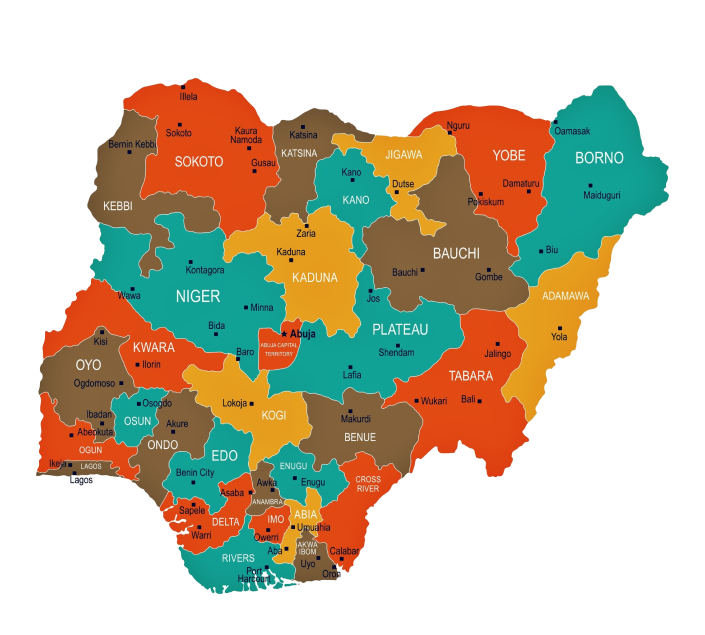
Nigeria is situated in the West African region and lies between longitudes 3 degrees and 14 degrees and latitudes 4 degrees and 14 degrees. It has a land mass of 923,768 sq.km. It is bordered to the north by the Republics of Niger and Tchad; it shares borders to the west with the Republic of Benin, while the Republic of Cameroun shares the eastern borders right down to the shores of the Atlantic Ocean which forms the southern limits of Nigerian Territory. The 800km of coastline confers on the country the potentials of a maritime power. Land is in abundance in Nigeria for agricultural, industrial and commercial activities.

Nigeria is recognized as one of the largest economies in Africa, characterized by a mixed economic structure that incorporates both state-owned and private enterprises. This classification places Nigeria among emerging markets and lower middle-income countries. As at 2023, Nigeria’s Gross Domestic Product (GDP), is estimated to be about $252.7 billion United States Dollars, resulting in a per capita GDP of about $1,100. By this and ​with the largest population on the continent, Nigeria ranks as the fourth largest economy by total GDP.
Between 2000 and 2014, Nigeria’s economy experienced robust and sustained growth, averaging over 7% annually, bolstered by favourable global conditions and initial structural reforms. However, from 2015 to 2022, growth rates declined, and GDP per capita stagnated. This downturn was influenced by distortions in monetary and exchange rate policies, escalating fiscal deficits from reduced oil production and a burdensome fuel subsidy, as well as external shocks like the COVID-19 pandemic.

Following the change in administration in May 2023, Nigeria has initiated bold reforms aimed at restoring macroeconomic stability and growth. These reforms include the elimination of the petrol subsidy and the unification of foreign exchange markets, resulting in a more market-reflective exchange rate. To mitigate the inflationary impact on vulnerable populations, the government has introduced temporary cash transfers for 15 million households. Moreover, efforts to tighten monetary policy and refocus the Central Bank of Nigeria on its core mandate of maintaining price stability are underway. Sustaining this reform momentum is critical for Nigeria to achieve long-term economic benefits. Although growth in the non-oil sector is expected to gradually improve, challenges remain, including risks associated with the pace of reforms, persistent inflation, and external factors such as insecurity and climate-related shocks.

For more information, please check the Central Bank of Nigeria’s website: https://www.cbn.gov.ng/

Industry Trade and Investment

The Federal Ministry of Industry, Trade, and Investment (FMITI) is the Ministry of the Federal Republic of Nigeria tasked with creating a conducive environment to stimulate domestic investment and attract foreign direct investment across all sectors of the Nigerian economy, positioning Nigeria as the preferred investment destination. Additionally, FMITI aims to facilitate trade in goods and services, maximizing the advantages of international trade through effective bilateral and multilateral trade relations with other nations. A key focus is to accelerate the growth of the industrial sector while enhancing overall productivity and supporting the development of Micro, Small, and Medium Enterprises (MSMEs) as vital drivers of economic growth.

FMITI implement this mandate through various programs, including the Nigerian Industrial Revolution Plan (NIRP), the National Enterprise Development Programme (NEDEP), and the Trade Policy, all of which are designed to promote investment and industrialization throughout the country. These initiatives work collectively to foster an enabling environment that encourages business growth and enhances the nation’s economic landscape.

For more information, please check the Federal Ministry of Industry, Trade and Investment’s website: https://fmiti.gov.ng/

The Federal Ministry of Agriculture and Food Security is Ministry of the Federal Republic of Nigeria tasked with developing and executing policies and strategies in Nigeria’s agricultural sector to ensure sufficient food supply for a growing population. The Ministry aims to provide adequate raw materials for an expanding industrial sector, enhance market access for crops, livestock, and agro-allied products, create continuous employment opportunities, and promote economic diversification for national development.

To support these objectives, the Ministry allocates resources for various agricultural projects and programs. Additionally, efforts are bolstered by partnerships and funding from donor organizations, facilitating the successful implementation of numerous agricultural initiatives throughout the country.

For more information, please check the Federal Ministry of Agriculture and Food Security’s website: https://agriculture.gov.ng/

The National Digital Economy Policy and Strategy aims to transform Nigeria into a leading global digital economy, enhancing the quality of life and providing digital opportunities for all citizens. The strategy is built around eight key pillars: Developmental Regulation, Digital Literacy & Skills, Solid Infrastructure, Service Infrastructure, Digital Services Development & Promotion, Soft Infrastructure, Digital Society & Emerging Technologies, and Indigenous Content Development & Adoption. These pillars align with the Federal Government’s Economic Recovery and Growth Plan and focus on economic development, anti-corruption, and security.

The Ministry in charge of this initiative is the Federal Ministry of Communications and Digital Economy, which was re-designated to reflect its expanded mandate in October 2019. This ministry is responsible for coordinating activities related to Nigeria’s digital economy and ensuring the development and implementation of the Digital Economy Policy and Strategy. The ministry’s mission is to leverage digital technologies for national economic development, positioning it as a central player in the country’s digitization efforts.

For more information, please check the following websites:

https://fmcide.gov.ng/

https://nitda.gov.ng/

Visit Nigeria

Come experience culture
Our cities never sleeps